
All Insights
Practical legal guidance on litigation, business law, employment, formation, nonprofit law, and estate planning — for businesses and individuals in New York and New Jersey.

Financial Exploitation of Elderly Investors: What Families Need to Know
Written for family members who suspect an elderly parent or relative has been harmed by broker misconduct. Covers why elderly investors are disproportionately targeted — cognitive changes, social isolation, accumulated assets with reduced oversight, and deference to professional authority — warning signs to identify in account statements and broker relationships, what elder financial exploitation looks like in a securities context including unsuitable product sales and cultivated undue influence, FINRA Rule 2165's temporary hold mechanism for senior investor accounts, how families can pursue claims when the investor cannot act independently through durable power of attorney or a supporting role, the discovery-based eligibility period analysis for elderly investor claims, and practical steps families can take before consulting an attorney.

The Five Most Common Types of Broker Misconduct That Harm Investors
Explains the five primary categories of broker misconduct that generate FINRA arbitration claims — unsuitable recommendations under FINRA suitability rules, unauthorized trading without a discretionary account agreement, churning identified through portfolio turnover and cost-to-equity ratios, misrepresentation and material omission in the disclosure of investment risks and conflicts of interest, and failure to supervise as an independent basis of firm liability. Each category is explained with practical examples of how it presents in actual investor accounts.

Did Your Broker Cost You Money? Your Legal Rights After Investment Losses
Explains the legal framework for investor claims arising from broker misconduct — distinguishing between market losses and losses caused by a broker's violation of their legal obligations. Covers the five primary categories of actionable conduct, the FINRA arbitration process as the primary dispute resolution forum, the scope of recoverable damages, and the eligibility period considerations for claims filed after losses occurred.

Buy-Sell Agreements: How to Set the Rules for a Business Divorce Before It Happens
Designing effective buy-sell provisions for New York and New Jersey closely held businesses: common failures in existing operating agreements, triggering events (death, disability, voluntary departure, involuntary termination with for-cause distinction, deadlock with shotgun and right-of-first-offer mechanisms), fixed price and formula and appraisal valuation methodologies, life insurance funding through entity purchase and cross-purchase structures, installment payment provisions, rights of first refusal, tag-along and drag-along rights, non-compete enforceability, and the interaction between contractual provisions and BCL Sections 1104-a and 1118 and N.J.S.A. 14A:12-7.

What Happens When Business Partners Can't Agree on Value: Appraisal Clauses, Court-Appointed Experts, and the Litigation Path in New York and New Jersey
Dispute resolution mechanisms for business valuation disagreements in New York and New Jersey: contractual appraisal clauses and their enforceability, court-appointed neutral appraisers under BCL Section 1118 and N.J.S.A. 14A:12-7, the structure of dueling expert litigation, the BCL Section 1118 procedural sequence from petition through the 90-day election window, mediation timing and strategy, the Section 1118 election decision, and the deferential appellate standard for judicial valuation determinations.

Goodwill in Business Buyouts: Why Personal Goodwill and Enterprise Goodwill Are Valued Differently in New York and New Jersey Disputes
Personal versus enterprise goodwill in professional practice buyout disputes: what each category is and why the law treats them differently, New York's approach under Friedman v. Beway and Grunfeld v. Grunfeld, New Jersey's approach under Dugan v. Dugan and N.J.S.A. 14A:12-7, the role of non-compete agreements, the evidentiary factors courts examine (client origination data, post-departure attrition, operational systematization, referral relationship structure), buy-sell agreement goodwill provisions, and the federal tax implications of the personal/enterprise split.

How Is a Business Valued in a New York or New Jersey Buyout or Shareholder Dispute?
How closely held businesses are valued in New York and New Jersey buyout and shareholder disputes: fair value under BCL Section 1118 and Friedman v. Beway (no minority or marketability discounts) versus fair market value in contractual buyouts (discounts of 20–40%), NJ oppression remedies under N.J.S.A. 14A:12-7 and Balsamides v. Protameen, the three valuation methodologies, the dollar impact of minority and marketability discounts, operating agreement valuation provisions, and personal versus enterprise goodwill.
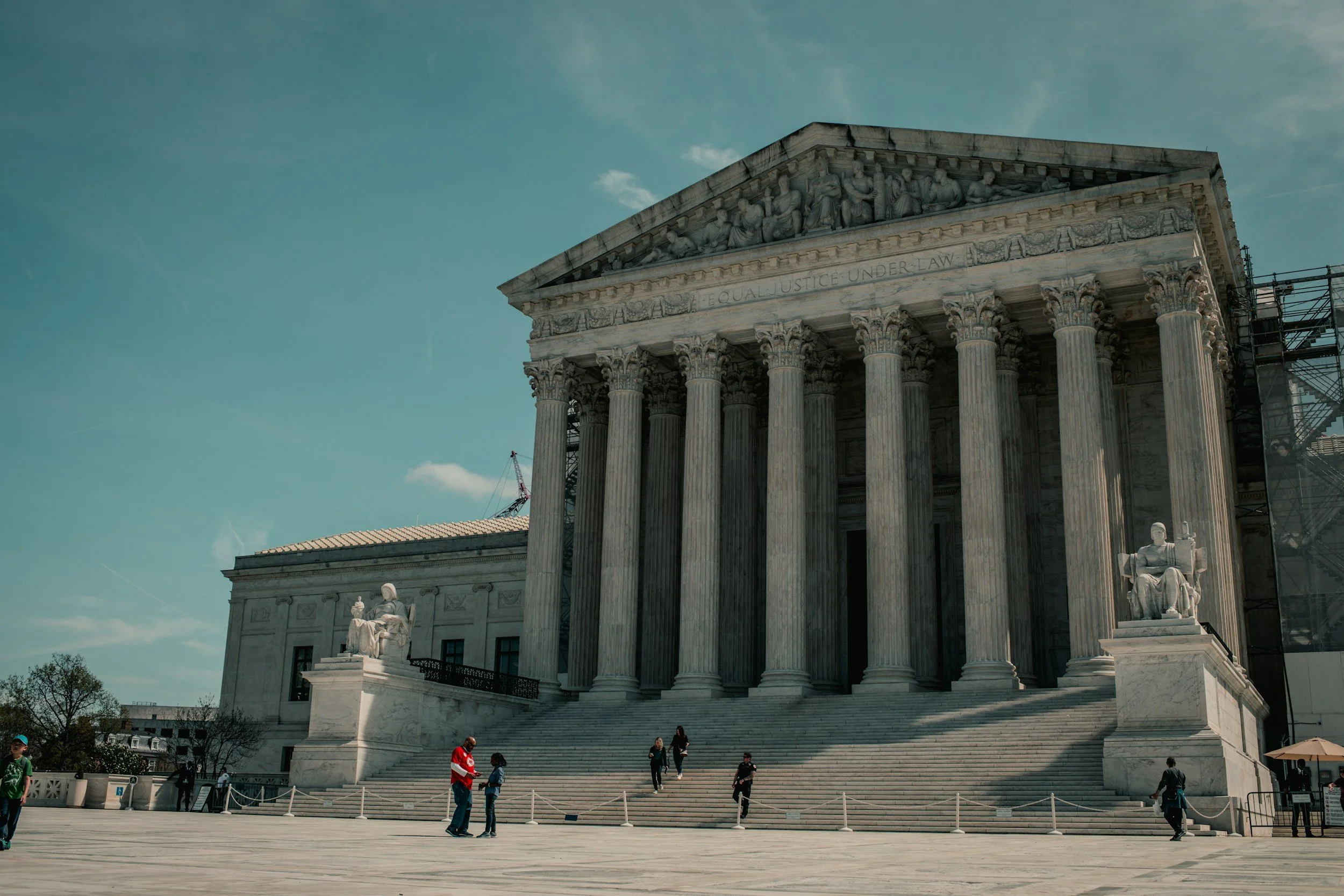
Your Arbitration Clause Just Got More Powerful: What Jules v. Balazs Means for Business Contracts
This article explains the Supreme Court's May 14, 2026 decision in Jules v. Andre Balazs Properties, No. 25-83, which unanimously holds that a federal court that stayed claims under FAA Section 3 retains jurisdiction to confirm or vacate the resulting arbitration award under Sections 9 and 10, without requiring the confirmation motion to independently establish federal jurisdiction. It covers the FAA's arbitration framework including the mandatory stay requirement under Smith v. Spizzirri, the distinction between Jules (prior federal lawsuit followed by arbitration) and Badgerow v. Walters (freestanding confirmation without prior federal lawsuit), the narrow substantive grounds for vacating an award under FAA Section 10, arbitration clause drafting considerations including scope, delegation, institutional rules, seat, governing law, and emergency relief carve-outs, post-award enforcement strategy including the Section 9 one-year confirmation window, and collectibility assessment before and after arbitration.

NY and NJ Sexual Harassment Standards: What Korean Employers Need to Know About Mandatory Policies, Training, and Liability
This article explains the sexual harassment obligations that New York and New Jersey impose on Korean employers, going well beyond the federal Title VII baseline. It covers the NYSHRL's 2019 amendment eliminating the severe or pervasive standard, the NYCHRL's broader liability framework applicable to NYC employers with four or more employees, New York State's mandatory written sexual harassment prevention policy requirements and annual training obligations for all employees regardless of size, New Jersey LAD's extension of individual personal liability to supervisors and managers who engage in or enable harassment, the specific investigation and documentation obligations triggered within 72 hours of receiving an internal complaint, the retaliation prohibition from the moment a complaint is made, Korean workplace cultural patterns — hierarchy-based informality, 회식 culture, and gender role task assignments — that create unintended legal exposure under U.S. standards, and the four components of a compliant employer: written policy, annual training, documented complaint procedure, and prompt investigation protocol.

My Business Was Just Served With an Employment Discrimination Complaint — First Steps for NY and NJ Employers
This article explains the seven immediate steps a New York or New Jersey employer must take upon receiving an employment discrimination complaint: identifying the type of proceeding and applicable deadlines (twenty-one days in federal court, twenty or thirty days in New York Supreme Court, thirty-five days in New Jersey Superior Court); refraining from all contact with the complainant to avoid retaliation exposure; issuing an immediate litigation hold covering physical and electronic documents including KakaoTalk and messaging app communications; notifying the EPLI carrier and requesting coverage confirmation; engaging employment defense counsel immediately; gathering and organizing the factual record under attorney-client privilege without reconstructing or backdating documents; and making an early, honest assessment of the claim's merits and settlement value before significant litigation costs accumulate.

Individual Liability Under the NJ Law Against Discrimination: When Managers Get Sued Personally
This article explains how New Jersey's Law Against Discrimination imposes individual personal liability on owners, managers, and supervisors who personally participate in discriminatory conduct under N.J.S.A. 10:5-12(e)'s aiding and abetting provision. It covers which individuals face personal exposure — owners, store managers, and supervisory employees — the conduct that triggers individual liability including discriminatory termination, hostile work environment harassment, retaliation, and failure to accommodate disability or pregnancy, the full scope of damages recoverable from individual defendants including compensatory damages, emotional distress, punitive damages, and mandatory attorneys' fees, EPLI insurance coverage limitations for individual defendants, and practical steps Korean business owners and managers can take to reduce personal exposure including documentation practices, complaint response protocols, culturally aware conduct standards, and supervisory training.

Wage and Hour Liability for Korean-Owned Businesses: The Five Most Common Violations
This article identifies the five wage and hour violations most commonly committed by Korean-owned businesses in New York and New Jersey: misclassifying employees as independent contractors under the FLSA, NYLL "suffer or permit" standard, and New Jersey's ABC test; failing to pay overtime to non-exempt employees including salaried workers; illegal tip pooling and improper tip credits under New York and New Jersey law; failing to provide wage notices and pay stubs as required by New York's Wage Theft Prevention Act; and failing to maintain accurate time and payroll records. It also addresses personal liability of owners under the FLSA and NYLL's broad definition of "employer."

Church Bylaws: The Most Overlooked Document in Religious Organization Governance
This article explains why church bylaws are the most consequential and most neglected governance document in religious organizations, and what legally adequate bylaws must contain under New York and New Jersey law. It covers mandatory and recommended bylaw provisions under N.Y. N-PCL Section 602 and N.J.S.A. 15A:2-9, membership definition and termination procedures under N-PCL Section 601, board composition and election provisions under N-PCL Section 703, staggered board structures, the pastor's role and removal provisions and their relationship to pastoral employment agreements, quorum requirements under N-PCL Section 707, notice requirements under N-PCL Section 605, differentiated voting thresholds for different decision types, amendment procedures and the danger of informal practice, and a framework for conducting a comprehensive bylaw audit.

When a Church Breaks From Its Denomination: Building, Bank Accounts, and Name in New York and New Jersey
This article explains how courts in New York and New Jersey resolve property disputes when a local church breaks from its denomination. It covers the distinction between hierarchical and congregational polity, the deference rule established in Watson v. Jones and Presbyterian Church v. Hull, the neutral-principles approach adopted in Jones v. Wolf, 443 U.S. 595 (1979), express trust clauses and their enforceability, deed analysis and presumptions of local ownership, financial asset disputes and restricted fund obligations, church name rights under state corporate law and federal trademark law, and the steps a congregation should take before and after a denominational break including UCC lien searches, review of denominational polity documents, and corporate governance updates.

When Church Members Sue the Church: Derivative Claims, Removal of Officers, and Internal Dispute Resolution in New York and New Jersey
This article explains the legal mechanisms available to church members in New York and New Jersey when they believe church leadership has engaged in financial misconduct or violated the church's governing documents. It covers the distinction between direct and derivative claims, the demand requirement under N.Y. N-PCL Section 623 and N.J.S.A. 15A:5-9, fiduciary duties of directors under N-PCL Section 717, judicial removal of directors for cause under N-PCL Section 706(d) and N.J.S.A. 15A:6-12, the ten-percent membership threshold for removal petitions, contested elections under N-PCL Section 619, member inspection rights under N-PCL Sections 620 and 621 and N.J.S.A. 15A:5-24, improper membership termination as a direct claim, the First Amendment neutral-principles framework and its limits on court jurisdiction, and internal dispute resolution including mediation before litigation.

Who Controls the Church? Board Authority, Pastor Authority, and Governance Disputes in New York and New Jersey Nonprofits
This article explains how authority is legally allocated in a church nonprofit under New York and New Jersey law. It covers board authority under N.Y. N-PCL Section 701 and N.J.S.A. 15A:6-1, the New York Religious Corporations Law's dual governance structure, the First Amendment's neutral-principles-of-law framework established in Jones v. Wolf, 443 U.S. 595 (1979), the sources and limits of pastoral authority including written employment agreements and board delegation, quorum and notice requirements for valid board action under N-PCL Section 707, the N-PCL holdover rule under Section 703(d), judicial remedies for contested board elections under N-PCL Section 619, and practical steps when a board-pastor conflict arises including emergency court relief.

Korean Companies in U.S. Contract Disputes: How to Defend a Claim and Sue for Breach in New York and New Jersey
This article explains how Korean companies should navigate U.S. contract disputes on both sides of the dispute. It covers the fundamental differences between U.S. and Korean contract practice including the parol evidence rule, no-oral-modification clauses under New York General Obligations Law Section 15-301, and course of dealing principles; defendant obligations including answer deadlines in New York Supreme Court, New Jersey Superior Court, and federal court, statute of limitations defenses under CPLR Section 213(2) and UCC Section 2-725, and common contractual defenses; plaintiff strategy including demand letters, forum selection, diversity jurisdiction under 28 U.S.C. § 1332, collectibility assessment, and prejudgment attachment under CPLR Article 62; and jurisdiction and governing law including enforcement of choice-of-law clauses under New York General Obligations Law Section 5-1401, application of Korean law in U.S. courts, mandatory versus permissive forum selection clauses under M/S Bremen and Atlantic Marine, and personal jurisdiction over Korean defendants.

ICC Arbitration for Korean Companies with U.S. Commercial Contracts: A Practical Guide
This article explains ICC arbitration for Korean companies with U.S. commercial contracts. It covers the ICC's 2021 Arbitration Rules, arbitration clause drafting including seat, governing law, and number of arbitrators, common seats for Korea-U.S. disputes including New York and Singapore, Request for Arbitration procedures, tribunal constitution and co-arbitrator nomination, document production under IBA Rules, the ICC scrutiny process for draft awards, ICC administrative and arbitrator fee structures, enforcement of ICC awards in U.S. federal courts under Chapter 2 of the Federal Arbitration Act implementing the New York Convention, enforcement in Korea under the Korean Arbitration Act, emergency arbitrator relief under the ICC Rules, and strategic considerations including language, co-arbitrator selection, and the distinction between ICC and KCAB International.

Equipment Purchase and Sale Agreements in New York and New Jersey: What Buyers and Sellers Need to Know
This article explains the legal framework governing equipment purchase and sale agreements in New York and New Jersey under UCC Article 2, as enacted at N.Y. U.C.C. §§ 2-101 et seq. and N.J.S.A. 12A:2-101 et seq. It covers express warranties under UCC Section 2-313, implied warranties of merchantability and fitness under UCC Sections 2-314 and 2-315, warranty disclaimer requirements under UCC Section 2-316, risk of loss allocation under UCC Section 2-509, inspection and acceptance under UCC Sections 2-513 and 2-606, the seller's right to cure under UCC Section 2-508, limitation of consequential damages under UCC Section 2-719, UCC-1 financing statement perfection requirements, the four-year statute of limitations under UCC Section 2-725, and special considerations for used equipment transactions including UCC lien searches and pre-purchase inspections.

Settling a Business Dispute Without Going to Court: Mediation, Arbitration, and Negotiation in New York and New Jersey
This article explains the three principal alternatives to litigation for New York and New Jersey business disputes — negotiation, mediation, and arbitration. It covers the confidentiality protections for mediation under CPLR Section 4547 and the New Jersey Uniform Mediation Act N.J.S.A. 2A:23C-1, arbitration clause enforceability under the FAA and New York law, AAA and JAMS commercial arbitration procedures, the narrow grounds for vacating an arbitration award under CPLR Article 75 and N.J.S.A. 2A:23B-23, enforcement of awards under N.J.S.A. 2A:23B-22, and a practical framework for choosing among dispute resolution methods based on contract terms, amount in dispute, and relationship considerations.