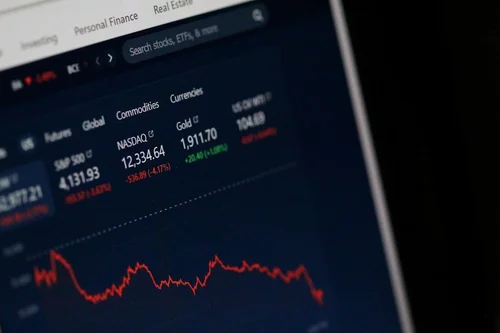

When investment losses occur, the natural reaction is to attribute them to market conditions or one's own decisions. That explanation is sometimes correct. But not every investment loss reflects bad luck or poor judgment — some losses are caused by broker conduct that violates the legal obligations brokers owe their customers. When that is the case, the investor may have a legal claim for recovery through FINRA arbitration. This article explains what types of broker conduct give rise to such a claim, and how the process works.
Not Every Loss Is a Legal Claim
Investment losses alone do not create a legal claim. Markets decline, and that is a risk every investor accepts. The basis for a legal claim is not the loss itself but the conduct that caused it — specifically, whether a broker violated the legal duties they owed to the investor. Those duties are defined by FINRA rules and federal and state securities law, and they are specific.
The basis for a legal claim is not the loss itself — it is the conduct that caused it.
When a broker falls short of those standards and an investor suffers losses as a result, the law provides a mechanism for holding the broker and their firm accountable.
What Types of Broker Conduct Give Rise to a Claim?
The following are the primary categories of broker misconduct that lead to investor claims.
Unsuitable recommendations. A broker must recommend only investments that are appropriate for the specific customer — taking into account their age, financial situation, investment experience, risk tolerance, and stated objectives. Recommending a high-risk or speculative product to an investor whose circumstances call for capital preservation is a violation of this obligation regardless of the broker's confidence in the recommendation.
Unauthorized trading. Unless an investor has signed a discretionary account agreement granting the broker authority to trade without prior approval, every transaction requires the investor's consent before it is executed. Trading without that authorization is a violation of FINRA rules, regardless of the outcome of the trade.
Churning. Churning occurs when a broker executes trades at a frequency that serves their interest in generating commissions rather than the investor's interest in their portfolio. The result is elevated transaction costs for the investor and compensation for the broker regardless of account performance.
Misrepresentation and omission. A broker must provide accurate and complete information about the investments they recommend. This means not making false or misleading statements and not omitting material facts that would affect an investor's decision. Both forms of disclosure failure can give rise to liability.
Failure to supervise. Brokerage firms are required to supervise the brokers they employ and to maintain systems reasonably designed to prevent and detect misconduct. When a firm's supervisory failures allow a broker's misconduct to continue undetected, the firm bears independent responsibility for the resulting investor losses.
Where Claims Are Resolved: FINRA Arbitration
Most disputes between investors and their brokers or brokerage firms are resolved through FINRA arbitration. FINRA — the Financial Industry Regulatory Authority — regulates brokers and brokerage firms in the United States and operates a dispute resolution program for investor claims. The process is generally faster and less costly than court litigation, and a panel of arbitrators decides the case without a jury.
Standard brokerage account agreements require FINRA arbitration as the method for resolving disputes, which means it is typically the primary — and often exclusive — forum for investor claims against brokers and their firms. A detailed explanation of the FINRA arbitration process is available in Good Pine's separate procedural guide.
What Can Be Recovered?
Through FINRA arbitration, investors may seek recovery of direct investment losses caused by the broker's misconduct, excessive commissions and fees that were improperly charged, and lost profits representing what a properly managed account would have earned. In cases involving particularly egregious conduct, punitive damages or attorneys' fees may also be available.
What is recoverable in a specific case depends on the nature of the misconduct, the extent of the losses, and the causal relationship between the two. Those questions require a review of the account records and relevant documentation.
Frequently Asked Questions
My losses occurred some time ago. Is a claim still possible?
FINRA arbitration claims are subject to eligibility periods. Whether a claim remains timely depends on the nature of the conduct, when it occurred, and when the investor knew or reasonably should have known about it. The eligibility analysis is fact-specific, and an attorney can assess where things stand based on the circumstances of your situation.
How is FINRA arbitration different from a court lawsuit?
FINRA arbitration is a private adjudicative process administered by FINRA. It is generally faster and less formal than court litigation, and decisions are made by arbitrators rather than a judge or jury. Because most brokerage account agreements require arbitration as the exclusive forum for disputes, it is the mechanism through which the majority of investor claims against brokers and firms are resolved.
Can I bring a claim against the brokerage firm as well as the individual broker?
Yes. Brokerage firms have an independent obligation to supervise the brokers they employ. When a firm fails to meet that obligation and a broker's misconduct causes investor losses, the firm may be independently liable. This is often significant because the firm, rather than the individual broker, is the party with meaningful financial resources to satisfy an award.
How do I know whether my situation gives rise to a claim?
Reviewing your account statements is a reasonable starting point. Transactions you do not recognize, fee levels that seem disproportionate, or a portfolio composition that does not match your stated objectives are factors worth examining. Whether those observations support a legal claim requires a review of the actual records by an attorney with experience in investor disputes.
Good Pine P.C. represents investors in New York and New Jersey in FINRA arbitration proceedings.
We offer consultations in English and Korean.
This article is provided by Good Pine P.C. for general informational purposes only and does not constitute legal advice. Reading this article does not create an attorney–client relationship. Laws and regulations may change, and their application depends on specific facts and circumstances. You should consult a qualified attorney before taking any legal action based on this information.